

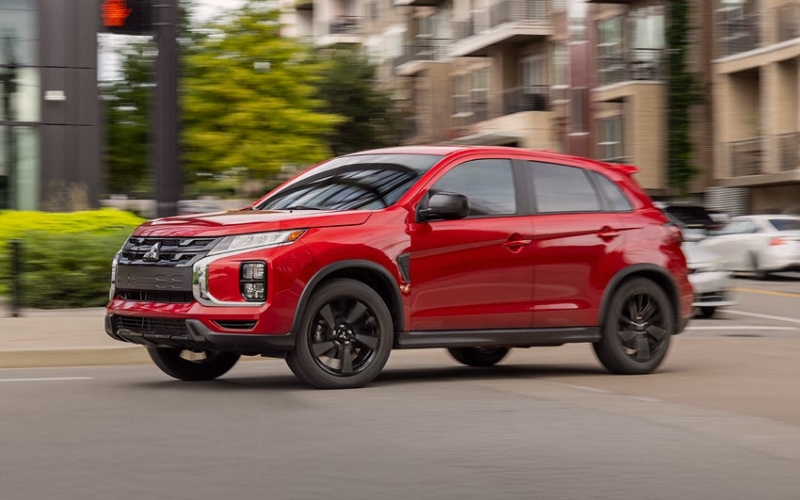
LaFontaine Mitsubishi Ann Arbor – Which SUV gives you more all-weather confidence around Wayne, MI — the 2026 Mitsubishi Outlander Sport or the 2026 Toyota Corolla Cross?
Choosing a small SUV often comes down to which one feels more composed when the weather and road surface refuse to cooperate. If the question centers on traction confidence around Wayne, MI, it helps to go deeper than a basic AWD badge. The 2026 Outlander Sport brings standard All-Wheel Control (AWC) across every trim, a multi-link rear suspension, and 8.5 inches of ground clearance. Corolla Cross offers the choice of front-wheel drive or all-wheel drive on gas models and multi-link suspension on hybrid variants. Both bring active safety and modern infotainment, yet the way each platform delivers grip and stability differs in daily life.
This guide answers the most common question shoppers ask when cross-shopping these two: which SUV builds trust fastest when the road gets messy? Below, you’ll find a structured look at traction systems, suspension design, steering character, technology that supports confident driving, and how those differences translate on I-94, in neighborhood cut-throughs, and on the two-lane stretches between errands. LaFontaine Mitsubishi Ann Arbor, serving Ypsilanti, Dexter, and Wayne, prepared this overview to address that single, crucial topic: everyday all-weather composure.
AWC vs. AWD: What’s the difference you actually feel?
Outlander Sport’s All-Wheel Control monitors wheel slip and driver input to balance torque front to rear proactively, not just reactively. With AWC standard, every trim delivers four-corner traction without needing to step up to specific configurations. That baseline matters when surprise lake-effect flurries dust the roadway or when a damp morning leaves an oily sheen on intersections. Gas Corolla Cross models can be equipped with AWD, but shoppers must choose the correct grade; hybrid grades pair AWD with a multi-link rear suspension for sharper chassis responses. Both approaches work, yet the Mitsubishi advantage is about certainty: the traction tool set arrives built-in on every model.
Suspension and steering: Why the rear layout matters
Outlander Sport uses a multi-link rear suspension across the lineup. This design helps the rear wheels follow uneven pavement more independently, improving ride quality and stability mid-corner. Corolla Cross uses a torsion beam rear suspension on most gas models and a multi-link arrangement on hybrids. That difference appears as steadier tracking over patched asphalt, less lateral head toss through expansion joints, and more composed braking on bumpy surfaces in the Mitsubishi. Electric power steering in both SUVs keeps effort light, yet Outlander Sport’s 34.8-foot turning circle tightens U-turns and parking maneuvers when traffic or snowbanks reduce space.
Active safety that supports traction
Both SUVs include forward-collision mitigation with pedestrian detection and automatic high beams. Toyota Safety Sense 3.0 adds lane centering and updated radar-cruise logic. Outlander Sport counters with a clear, predictable safety suite and the inherent advantage of standard AWC that keeps more tire contact available when evasive moves are needed. While software assists can inform and intervene, mechanical grip often determines the outcome at low speeds on slick surfaces. The Mitsubishi formula blends both: helpful alerts and braking assistance paired to traction hardware that is always online.
Tech and visibility: Small details, big assurance
Each model starts with an 8-inch touchscreen, Apple CarPlay® and Android Auto™, and intuitive steering-wheel controls. Outlander Sport adds standard LED low and high beams and standard rain-sensing windshield wipers across trims. Those two elements reduce cognitive load in quick-changing conditions by improving forward illumination and removing the need to constantly adjust wiper speed. Available heated front seats and an auto-dimming mirror with Homelink® further simplify the cockpit on dark commutes, while available rear USB ports keep passengers powered.
Real-world translation: What happens on your weekly loop
Picture a typical week: wet leaves on the pavement after a school drop-off, a late-afternoon shower turning to flurries on the way back from lunch along Michigan Avenue, and a quick turn into a tight driveway peppered with pothole patches. Outlander Sport’s standard AWC and multi-link rear end track cleanly over the rough patches, apply power smoothly when traction is mixed, and make the last-minute turning maneuver feel controlled. The Corolla Cross, equipped with AWD and multi-link suspension, can feel similarly settled, but only if those options are chosen. The practical takeaway is simple: Outlander Sport’s default configuration already matches the environment.
- Every-trim traction: Outlander Sport includes AWC standard, so four-corner help arrives without boxes to check.
- Chassis composure: A standard multi-link rear suspension helps the Mitsubishi stay planted over rippled corners and patched asphalt.
- Confidence add-ons: Standard rain-sensing wipers and LED low/high beams reduce effort in quick-changing conditions.
Frequently Asked Questions:
Does the Outlander Sport include AWD on every trim?
Yes. All-Wheel Control is standard across the Outlander Sport lineup, so you do not need to move up a grade for four-corner traction.
How does ground clearance compare?
Mitsubishi specifies 8.5 inches for Outlander Sport, supporting better clearance on rutted alleys or unplowed side streets. Corolla Cross lists 8.1 inches on most configurations.
Which model offers better maneuverability in tight spots?
Outlander Sport’s 34.8-foot turning circle helps with quick U-turns and snug parking. Corolla Cross lists a 17.7-foot minimum turning radius, which equals about a 35.4-foot turning circle on comparable wheels.
Final perspective
Both SUVs can be configured for capable all-weather driving. If the goal is to remove guesswork and build traction confidence right from the start, Outlander Sport delivers the surest path with standard AWC and a standard multi-link rear suspension that calms rough pavement. Add LED lighting and rain-sensing wipers that simplify reaction time, and the Mitsubishi platform feels tuned for southeast Michigan’s mixed surfaces and quick weather shifts. For a closer look, a short test route that includes neighborhood side streets, a freeway merge, and a few tight turns will make the differences obvious within minutes.
Visit LaFontaine Mitsubishi Ann Arbor for a walkaround focused on traction and chassis tuning, and bring the questions that matter for your daily routes. A well-structured comparison drive makes it easy to feel the gap in grip, stability, and steering response when conditions are less than ideal.
Request more 2026 Mitsubishi Outlander Sport information
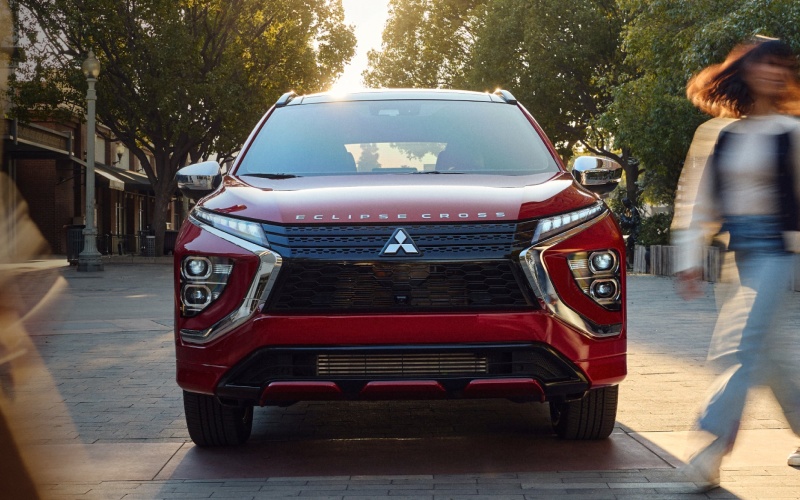
LaFontaine Mitsubishi Ann Arbor – Which AWD system fits daily life better around Dexter, MI — 2026 Mitsubishi Eclipse Cross’ S-AWC or 2026 Jeep Compass’ Active Drive 4×4?
When shoppers compare the 2026 Mitsubishi Eclipse Cross and the 2026 Jeep Compass, one question rises to the top: which all-wheel-drive system feels more reassuring in everyday driving? You’ll see plenty of spec-sheet talk about modes, crawl ratios, and horsepower. But if your miles are mostly paved—school drop-offs, parking garages, office runs, and weekend getaways—the way each system anticipates changing grip and keeps the cabin calm matters more than an extra off-road setting you’ll rarely use. Below, we’ll break down how Mitsubishi’s Super-All Wheel Control (S-AWC) and Jeep’s Active Drive 4×4 systems behave in the real world, and where each shines.
What S-AWC and Active Drive do on the roads you actually drive
Mitsubishi’s S-AWC is designed to be predictive and subtle. It coordinates the vehicle’s stability control, braking, and torque distribution to keep you on your intended path, even when a lane line is buried under slush or one side of the road is shinier than the other. There’s no drama—just a settled steering feel and the sense that the vehicle won’t get pulled off course by patchy surfaces or crowned pavement. That’s especially helpful when you’re turning left across traffic and hit a painted arrow or a manhole cover at the apex. S-AWC focuses on the kind of micro-corrections that reduce both steering corrections and heart rate.
Jeep Active Drive 4×4 sends power to the wheels that need it and lets you choose drive modes via Selec-Terrain. In Compass Trailhawk, Active Drive Low adds a 20:1 crawl ratio and a Rock Mode that’s superb for technical terrain. On-road, the standard Active Drive system confidently moves torque around to find grip, delivering the poised traction you’d expect from a Jeep. Where it differs from S-AWC is in the way the chassis feels when the surface changes quickly—S-AWC tends to smooth over those transitions a bit more in daily use, while Active Drive is tuned with a broader remit that includes more frequent off-pavement work.
Comfort, noise, and those “everyday” intersections
The compact SUV that makes you less tired at day’s end is usually the one that keeps noise and vibration out of the cabin and avoids needless shifting or throttle flare. In the 2026 Eclipse Cross, the turbo 1.5-liter and its smooth CVT work quietly in the background, and the S-AWC system reduces the steering corrections you make on uneven surfaces. It’s a calming effect you notice during long stretches on I-94 and on side streets where potholes and repairs can upset a chassis. When you pull out to pass or merge, available paddle shifters let you “slot” into the right ratio, but the baseline character is serene, especially for passengers.
In the 2026 Compass, the 2.0-liter turbo and 8-speed automatic deliver zippier response and more confident towing, particularly helpful if your plans include a small trailer. The all-wheel-drive system is more than capable on wet or snowy days, and Trailhawk’s hardware elevates rough-road performance. If you truly split your time between trailheads and pavement, that combination is compelling. But if you mostly face stoplights, freeway ramps, and city parking, you may prefer the Eclipse Cross’s quieter demeanor and the way S-AWC trims little slips before they become big steering inputs.
Parking, tech, and stress reduction
Parking lots can be more stressful than snow—tight aisles, low visibility, and people darting around. Here, the 2026 Eclipse Cross’s available Multi-View Camera System gives you a 360-degree perspective. Pair that with an available Handsfree Power Tailgate and you solve two everyday headaches: seeing what’s around you and loading cargo without a juggle. Apple CarPlay and Android Auto compatibility are straightforward, and available Mitsubishi Connect with Safeguard and Remote Services adds peace of mind.
The 2026 Compass counters with an available 10.1-inch Uconnect touchscreen and an available 10.25-inch Digital Cluster Display that are both crisp and responsive. Available Active Driving Assist can reduce fatigue on longer drives. While Compass offers an available hands-free power liftgate and excellent outward visibility, it typically doesn’t offer a factory 360-degree camera, so drivers who prize top-down parking views may lean toward Eclipse Cross on feature content alone.
Long-term confidence and maintenance support
One of the biggest differentiators here is ownership coverage. Mitsubishi backs the Eclipse Cross with an industry-leading 10-year/100,000-mile Powertrain Limited Warranty, 5 years of 24-hour Roadside Assistance, and standard 2-Year/30,000-Mile Limited Maintenance. That’s a meaningful signal of durability and support for the way most drivers own a compact SUV—years and tens of thousands of miles of commuting, errands, and road trips. Jeep’s warranty coverage is solid, but Mitsubishi’s longer powertrain coverage and built-in maintenance tip the scales if you’re trying to minimize long-term surprises.
Which is right for your life near Dexter, MI?
If your driving is 95-percent pavement—commuting, after-school pickups, and regular trips to the market—the Eclipse Cross’s S-AWC and its calm, quiet chassis are the advantages you’ll feel most often. If you tow more frequently or spend many weekends on rugged two-tracks, Compass’s extra power and Trailhawk hardware are legitimate strengths. Most shoppers, though, will notice the Eclipse Cross’s refinement, parking tech, and ownership coverage every day. That’s why many local drivers ultimately choose it after a back-to-back drive.
Frequently Asked Questions:
Which AWD system reacts faster on wet or uneven pavement?
Both are quick to find grip, but S-AWC’s integration of stability control, braking, and torque distribution tends to feel more seamless in everyday transitions, like painted lines, steel plates, or plowed-but-slick sections.
Do I need Trailhawk capability if I don’t go off-road?
No. Trailhawk shines off-pavement. If your miles are urban and suburban, Eclipse Cross’s S-AWC provides the traction you want without the off-road focus you may not use.
Which model makes parking easier?
Eclipse Cross offers an available Multi-View Camera System for a 360-degree view, which helps with tight spaces and low-speed maneuvering; Compass generally does not offer a factory surround-view camera.
Is there a difference in long-term coverage?
Yes. Mitsubishi includes an industry-leading 10-year/100,000-mile Powertrain Limited Warranty and standard 2-Year/30,000-Mile Limited Maintenance on Eclipse Cross, delivering more long-term value.
Next steps
Now that you know how the AWD systems behave in the real world, the best move is a back-to-back drive on your usual roads. Bring a typical load, test parallel spots, and take the same on-ramp. You’ll quickly sense why Eclipse Cross feels calmer in daily life. LaFontaine Mitsubishi Ann Arbor, serving Ypsilanti, Dexter, and Wayne with a knowledgeable, no-pressure approach, can set up an easy route and walk you through features that matter most to your routine.
In short, if your priority is year-round confidence, quietness, and everyday ease, the Eclipse Cross—with standard S-AWC, available Multi-View Camera System, and standout coverage—deserves the top spot on your list.
Request more 2026 Mitsubishi Eclipse Cross information
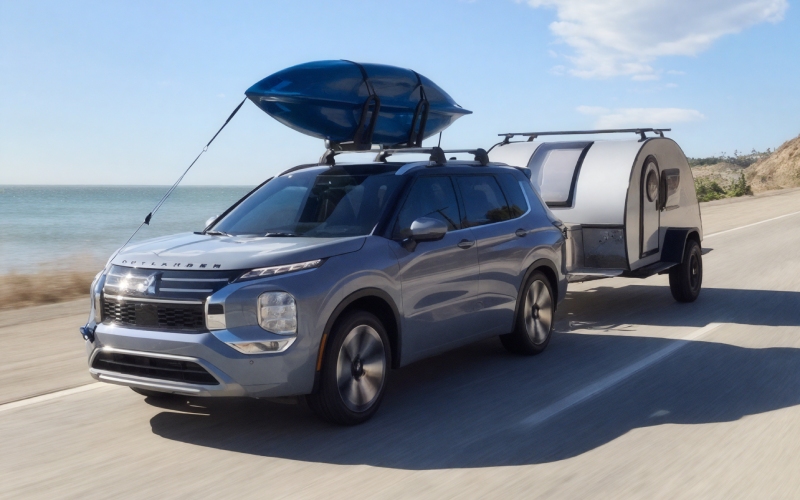
LaFontaine Mitsubishi Ann Arbor – Which SUV actually gives you three-row flexibility near Ypsilanti, MI — the 2026 Mitsubishi Outlander or the 2026 Kia Sportage?
When families compare compact SUVs, one question rises to the top: which model truly offers three-row flexibility without moving up to a larger vehicle? That’s where the 2026 Mitsubishi Outlander pulls ahead of the 2026 Kia Sportage. The Outlander seats up to seven thanks to a smartly packaged third row that folds flat when not in use, creating a versatile cargo floor. The Sportage, on the other hand, is a five-passenger SUV—spacious in the second row and generous in cargo area, but it simply doesn’t offer a third row. If your daily life includes carpooling, grandparents in town, or the occasional extra teammate after practice, that difference matters.
Beyond the extra seating, the Outlander leans into family-friendly tech designed to reduce hassles. Standard Wireless Apple CarPlay® and Android Auto™ keep the cabin tidy, and the available 360° multi-view camera system helps when you’re backing into tight curbside spaces. Available MI-PILOT Assist™ with Navi-link brings together Adaptive Cruise Control with Stop & Go, Lane Keep Assist, Lane Departure Prevention, and Traffic Sign Recognition to take the edge off longer drives. The 2026 Kia Sportage answers with a striking interior and the available Dual Panoramic Display, elevated driver-assistance features like Highway Driving Assist, and available Surround View Monitor—but the missing third row remains a deciding factor for many households weighing future flexibility.
Why third-row flexibility matters
Three-row seating in a compact footprint is about more than headcounts. In the 2026 Outlander, the 40:20:40 split second row and fold-flat third row let you configure the cabin for gear, passengers, or both. Need a long load-through for skis or home-project supplies? Fold the center section and keep two outboard seats available. Hosting two extra kids unexpectedly? Pop the third row upright. With the Sportage, you’ll enjoy class-leading second-row legroom and a generous cargo hold, but you’ll still face a hard stop at five passengers.
If your week includes city errands, youth sports, and quick highway trips, the Outlander’s ease-of-use features stand out. The available kick-motion sensing power liftgate makes loading groceries or equipment far easier. The available Dynamic Sound Yamaha® Ultimate 12-speaker system, tuned by Yamaha® Sound Meisters, delivers a rich, cinematic soundtrack to every family outing, while Speed Compensated Volume and Rain Compensated Volume keep audio clear as road and weather conditions change.
Traction and stability when plans change
Michigan commutes and spur-of-the-moment weekend plans benefit from the Outlander’s available Super All-Wheel Control (S-AWC) and drive modes like Gravel, Snow, and Mud. By coordinating wheel torque and vehicle dynamics, S-AWC helps the Outlander feel settled and predictable on variable surfaces. The 2026 Kia Sportage is also a strong performer with available active AWD, torque-vectoring, and Multi-Terrain Modes (snow, mud, sand). Both SUVs are capable; the choice comes down to how you prefer confidence served up—S-AWC’s integrated control philosophy or Sportage’s terrain-optimized selection.
Safety is another area where both vehicles bring substantial value. Outlander includes 11 airbags and standard driver-assistance features such as Forward Collision Mitigation with Pedestrian Detection, Blind Spot Warning, Rear Cross Traffic Alert, and Rear Automatic Emergency Braking. The Sportage offers 15 standard collision-avoidance and driver-assist systems, available Blind-Spot View Monitor, available Surround View Monitor, and available Highway Driving Assist. You’ll feel well-supported either way; the Outlander’s standard rear automatic braking and airbag roster add reassurance you can feel good about.
Comfort, connectivity, and everyday convenience
Inside the Outlander, standard Wireless Apple CarPlay® and Android Auto™ reduce cord clutter, while an available 12.3-inch full digital driver display and an available power panoramic sunroof make the cabin feel modern and open. On upper trims and packages, luxury steps up with semi-aniline leather-appointed seating surfaces and a heated steering wheel. The Sportage counters with that impressive available Dual Panoramic Display (approximately 24 inches combined) and refined materials, plus conveniences like available Digital Key 2.0 and Kia Connect features that support remote functions.
Ultimately, if five seats meet your needs, the Sportage remains a confident, well-equipped choice with bold design. If you want to keep your options open for family, friends, and gear—without stepping into a larger SUV—the 2026 Outlander’s third row, flexible seat splits, and family-focused tech deliver day in and day out. It’s the difference between “we can bring one more” and “we’ll need a second car.”
Frequently Asked Questions:
Does the 2026 Mitsubishi Outlander’s third row fit adults?
The Outlander’s third row is best suited for kids, occasional adult use on short trips, or when you need to bring two extra passengers. For everyday adult comfort, the second row is the priority seating area.
Is Wireless Apple CarPlay® and Android Auto™ available on both SUVs?
Yes. Both the 2026 Outlander and 2026 Sportage offer Wireless Apple CarPlay® and Android Auto™ compatibility on select trims, providing easy access to maps, music, and messaging.
Do both offer a surround or multi-view camera?
Yes. The Outlander offers a 360° multi-view camera system, and the Sportage offers an available Surround View Monitor to assist with tight parking and low-speed maneuvering.
Whether you’re carpooling or planning family outings, three-row flexibility can be the deciding factor. Visit LaFontaine Mitsubishi Ann Arbor—serving Ypsilanti, Dexter, and Wayne—to explore the 2026 Outlander’s cabin versatility, available S-AWC, and thoughtful tech that supports real-world routines.
Request more 2026 Mitsubishi Outlander information
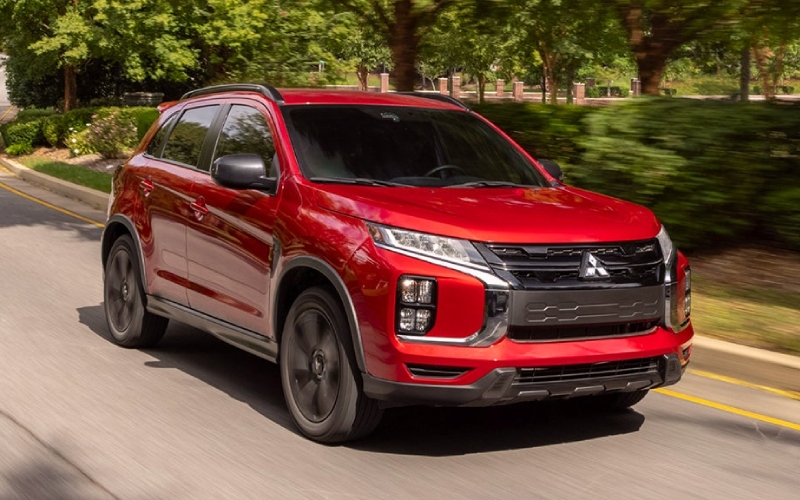
LaFontaine Mitsubishi Ann Arbor – 2026 Mitsubishi Outlander Sport — Smart Size, Big Capability for Ypsilanti, MI Drivers
The 2026 Mitsubishi Outlander Sport is built for everyday drives that mix city streets with quick highway hops. For the roadways around Ypsilanti, MI, that means predictable agility on Washtenaw Avenue, straightforward parking near Depot Town, and steady traction when your route takes you onto I-94 or US-23. This blog takes a closer look at the big strengths behind the Outlander Sport’s compact footprint—especially standard All-Wheel Control (AWC), practical cargo flexibility, and a straightforward tech setup that keeps life simple.
Right-Sized Handling That Makes Daily Driving Easier
Maneuverability shapes how stress-free a vehicle feels day to day, and the Outlander Sport’s dimensions are dialed in for Ypsilanti traffic and parking. The short overhangs and a 34.8-foot turning circle give it a nimble feel in older neighborhoods and tight lots. Pulling a quick U-turn on Cross Street or ducking into a compact parking space near the farmers market feels natural, not like you’re wrestling a vehicle that’s too big for your needs. Once you’re on the highway, the 2.0L MIVEC engine and CVT settle into a relaxed rhythm that’s pleasant for longer commutes.
Another touch that makes a clear difference is visibility and lighting. LED low and high beam headlights are standard across the lineup, supporting confident nighttime driving. Combine that with rain-sensing wipers, and you get a set-it-and-forget-it approach to conditions—especially helpful when weather changes as you commute between Ypsi and Ann Arbor.
Standard All-Wheel Control, Standard Confidence
What we appreciate most about the Outlander Sport is that All-Wheel Control (AWC) comes standard on every trim. Many compact crossovers make you pay extra or step up several trims to get AWD, but Mitsubishi includes AWC from the start. That’s helpful when your day mixes neighborhood streets with the short hills and uneven surfaces you’ll find on the way to a trailhead outside town. Working with the vehicle’s stability systems, AWC helps you feel planted and smooth, giving you a sense of poised control as surfaces vary.
Ground clearance at 8.5 inches also sets the Outlander Sport apart in useful ways. For Ypsilanti drivers, that means fewer worries about scraping when you pull into a steep driveway, or when you find yourself on gravel near the Huron River. It’s everyday capability—not a rock-crawling setup—executed in a way that matters for real-life driving.
Tech That’s Easy to Use on Day One
The Outlander Sport’s cabin tech is refreshingly straightforward. The 8.0″ Smartphone-Link Display Audio system with Apple CarPlay® and Android Auto is standard, which means your podcasts, playlists, and turn-by-turn directions are a tap away. There’s no need to climb trims for basics you’ll lean on every single day. Automatic climate control also comes standard, and steering wheel controls keep your hands where they belong while you jump between tracks or calls.
Move up to the LE trim, and you’ll get thoughtful upgrades like heated front seats and leather-wrapped touchpoints. The LE’s extra USB ports, including rear ports with both Type-A and Type-C, make it easier to keep everyone charged on longer drives along I-94. It’s a clean, simple layout that balances connectivity with minimal distraction.
Real-World Cargo Flexibility
Space behind the second row is a useful 21.7 cubic feet—room for a weekly grocery run or a couple of duffels and a backpack. Fold the 60:40 rear seat and you’ll open up to 49.5 cubic feet behind the front seats. That figure allows the Outlander Sport to punch above its size for errands, small furniture pickups, or a local move. You’ll still enjoy the nimble handling that fits older Ypsilanti streets, but you can pack the cargo area like a bigger vehicle when you need to.
For organization, simple accessories—such as the reversible cargo mat or cargo net—add convenient ways to keep items secure. If your weekends include biking the B2B Trail, an upright mount bike carrier is available, and you can also fit roof crossbars regardless of whether your trim has rails from the factory.
Safety That Supports Awareness and Control
We value the Outlander Sport’s emphasis on foundational safety. Forward Collision Mitigation with Pedestrian Detection, Lane Departure Warning, and Automatic High Beam come standard. That trio supports active awareness when you’re driving busier stretches of Michigan Avenue or navigating neighborhood streets near EMU. You’ll also find a rearview camera and a strong structural foundation in Mitsubishi’s RISE body construction, plus 7 airbags, including a driver knee airbag.
These features work in the background to lend a sense of calm during common, everyday situations—merging onto US-23, managing lane changes with clear intent, and staying attentive in urban traffic. It’s a thoughtful, well-balanced approach that complements the Outlander Sport’s right-sized handling.
Choosing Your Trim
All three trims share the essentials—AWC, the 8.0″ touch display with Apple CarPlay® and Android Auto, automatic climate control, and LEDs for low and high beams. The 2.0 ES adds 18-inch two-tone alloys and LED fog lights for extra style and light spread. The 2.0 LE moves to 18-inch black painted alloys and brings key comfort and convenience upgrades: heated front seats, leather-wrapped steering wheel/shift knob/parking brake, and front and rear USB ports that include Type-C. If you want a bolder aesthetic tied to Mitsubishi’s rally roots, look for the RALLIART edition with exclusive motorsport-inspired details.
Frequently Asked Questions:
Is All-Wheel Control standard on every 2026 Outlander Sport?
Yes. All trims include All-Wheel Control (AWC) as standard equipment.
What’s the turning circle, and why does it matter near Ypsilanti?
The turning circle is 34.8 feet. That helps with quick U-turns and tight parking near Depot Town and other popular local spots.
How much cargo space is available?
You’ll have 21.7 cubic feet behind the second row and up to 49.5 cubic feet with the rear seats folded.
Which tech features are standard?
An 8.0″ Smartphone-Link Display Audio system with Apple CarPlay® and Android Auto, automatic climate control, Bluetooth®, HD Radio®, SiriusXM® with trial, and a rearview camera are standard.
What are some key safety technologies?
Forward Collision Mitigation with Pedestrian Detection, Lane Departure Warning, Automatic High Beam, and a full suite of structural and passive safety features come standard.
For drivers around Ypsilanti, the 2026 Outlander Sport stands out by making the most-used features standard—AWC traction, LED lighting, core driver assists, and an 8.0″ infotainment system that feels familiar the moment you get inside. That’s what turns a compact crossover into an everyday companion that simply fits your life. LaFontaine Mitsubishi Ann Arbor, serving Ypsilanti, Dexter, and Wayne, is your resource for comparing trims, setting up a route that reflects your real commute, and exploring accessories that match your plans. If you value traction, agility, and practical tech without overcomplication, this SUV belongs on your list.
Request more 2026 Mitsubishi Outlander Sport information
Easier Parking and Smarter Loading with the 2026 Mitsubishi Eclipse Cross around Dexter, MI
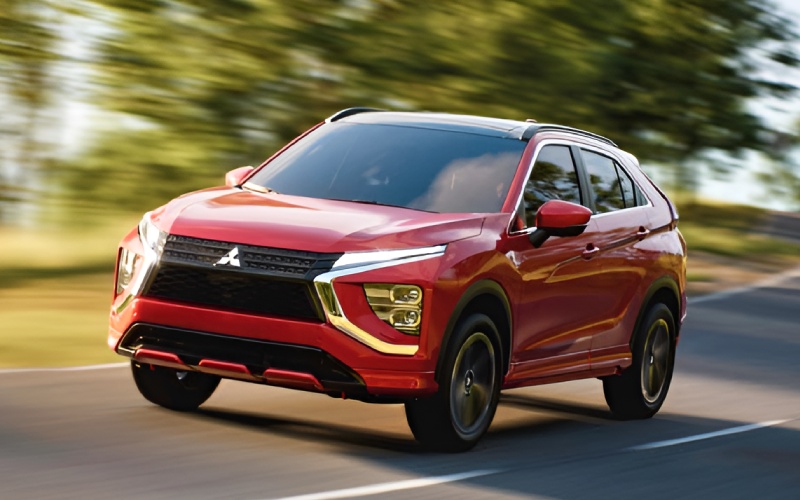
LaFontaine Mitsubishi Ann Arbor – Easier Parking and Smarter Loading with the 2026 Mitsubishi Eclipse Cross around Dexter, MI
Parking on Main Street near Dexter, cutting across sideroads to the Huron River, or loading up after a quick run to the orchard—small conveniences add up when your schedule’s full. That is exactly where the 2026 Mitsubishi Eclipse Cross shines. This compact SUV layers in thoughtful features that make daily life simpler, whether you are easing into a curbside space or packing the cargo area for weekend plans. In this blog, let’s zero in on two standouts: the available Handsfree Power Tailgate and the available Multi-View Camera System. Together, they make loading and parking feel a whole lot easier around town.
Handsfree Power Tailgate: Less Juggling, More Going
Dexter errands often mean bags, strollers, or gear in hand—and not a lot of free fingers. The Eclipse Cross’s available Handsfree Power Tailgate solves that common headache with a simple, quick motion to open up the cargo area. It is an upgrade you feel every time you shop, pick up takeout, or pack for a quick paddle. Just as important, the tailgate’s speed and height settings keep it predictable in low-clearance garages or tight spots. You get in, you get out, and the rest of the drive is a breeze.
Inside, the cargo space is thoughtfully proportioned for everyday use. The opening is wide, the load floor is accommodating, and the rear seatbacks fold easily when you want the flexibility for larger items. Add in available Leather Appointed Seating Surfaces or Synthetic Suede Seating Surfaces on higher trims, and the entire cabin has a durable, upscale feel that stands up to family, friends, and the inevitable coffee run.
Multi-View Camera System: Confidence Where It Counts
Even when you know the roads around Dexter, visibility can be tricky—angled curbs, narrow alleys, and busy lots where people and cars cross paths quickly. The available Multi-View Camera System in the 2026 Eclipse Cross gives you a clearer look at what’s around the vehicle while maneuvering. It is especially helpful when aligning with tight parallel spaces or easing out of a spot with limited sightlines. The system complements standard driver-assist features, so you get a better view paired with alerts that help you stay aware.
Speaking of those features, the Eclipse Cross builds confidence from the foundation up. Standard Forward Collision Mitigation (with Pedestrian Detection) and Lane Departure Warning contribute valuable support for everyday driving. Available Blind Spot Warning with Lane Change Assist and Rear Cross Traffic Alert further expand awareness—especially handy in hectic parking lots and during quick merges near local trailheads.
S-AWC and the Dexter Driving Rhythm
One reason Dexter drivers gravitate to the Eclipse Cross is that S-AWC is standard on every trim. Rather than being an add-on, this smart traction system is baked in—so from school runs to weekend detours, your SUV is working to optimize grip and stability. The comfort-tuned suspension smooths out patched pavement and neighborhood expansion joints, while the turbocharged 1.5-liter engine and CVT deliver smooth, predictable power for a steady, stress-free feel behind the wheel.
It all comes together in day-to-day use. You will notice the Eclipse Cross’s calm cabin during a quick hop on I-94, appreciate the precise low-speed control threading into a spot by the bakery, and rely on the standard safety net when the traffic picture gets busy. It is a combination designed for practical confidence—the kind you actually use.
Trim Thoughts: Matching Features to Your Routine
If convenient loading and easy parking are top priorities, you will want to look closely at SE and higher trims. The available Handsfree Power Tailgate appears here, and the available Multi-View Camera System is a highlight on the SEL. For a touch of style, BLACK EDITION adds black exterior accents and sport pedals, while SE Pano brings in an appealing panoramic-roof experience. Every trim includes S-AWC, Forward Collision Mitigation, and Lane Departure Warning, so even the value-focused ES gives you a strong foundation for confident driving.
- SE focus: Adds features like a power-adjustable driver seat, Power Folding Side Mirrors, and Mitsubishi Connect with Safeguard And Remote Services And 24-Month Trial (Enrollment Required).
- BLACK EDITION flair: Black Door Handle Trim, Black Roof Rails, and unique badging for a sportier visual statement.
- SEL tech: Multi-View Camera System, Leather Appointed Seating Surfaces, and comfort upgrades for a premium feel.
Practical Tips for Easier Parking and Loading
To get the most from the Eclipse Cross’s convenience tech, try these quick tips on your next drive:
- Practice using the available handsfree tailgate in your driveway to learn timing and placement—then set your preferred opening height to fit your garage.
- Turn on dynamic guidance lines for the available Multi-View Camera System, then use them to center the vehicle between curbs or align accurately in parallel spaces.
- Pair your phone and set favorite destinations so you are not fumbling with addresses during busy errands.
- Explore driver-assistance menu settings to adjust alert volume and sensitivity to your preference.
Frequently Asked Questions:
Do I need to choose a higher trim to get the Handsfree Power Tailgate?
The Handsfree Power Tailgate is available on SE and higher, pairing convenience with other helpful features like Power Folding Side Mirrors and LED Headlights.
Which trim includes the Multi-View Camera System?
The Multi-View Camera System is available on the SEL, adding parking confidence alongside comfort and design upgrades.
Is S-AWC standard on every Eclipse Cross?
Yes, S-AWC is standard across all 2026 Eclipse Cross trims for confident traction and control.
Can the Eclipse Cross help with tight city parking?
Yes. Standard active safety features help with awareness, while available tools like the Multi-View Camera System and Power Folding Side Mirrors make tight spaces easier to navigate.
How does Mitsubishi Connect help day to day?
With enrollment, Mitsubishi Connect with Safeguard And Remote Services And 24-Month Trial lets you check vehicle status, lock or unlock remotely, and access helpful support features.
For local families and commuters alike, the 2026 Eclipse Cross lines up the features that make the most difference during a typical Dexter day. When you are juggling errands, passengers, and changing plans, small conveniences become big advantages. The available Handsfree Power Tailgate and available Multi-View Camera System are two of the best examples—both reduce stress and help you move confidently through parking, loading, and busy streets. If you are ready to explore trims, colors, and accessories, LaFontaine Mitsubishi Ann Arbor is here to help—serving Ypsilanti, Dexter, and Wayne with a friendly, knowledgeable team and an easy, customer-centered process.
Request more 2026 Mitsubishi Eclipse Cross information
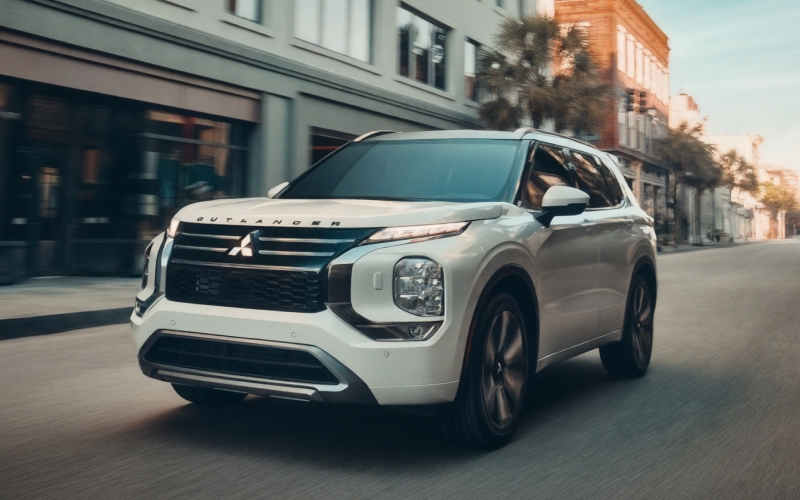
LaFontaine Mitsubishi Ann Arbor – How the 12.3-inch Smartphone-link Display Audio with Navigation in the 2026 Mitsubishi Outlander Elevates Daily Driving around Ypsilanti, MI
The 2026 Mitsubishi Outlander comes standard with a 12.3-inch Smartphone-link Display Audio with Navigation, and that single decision by Mitsubishi reshapes what daily driving looks like around Ypsilanti. It’s not just the size—though the larger canvas is certainly easier to read at a glance on Michigan Avenue or Ford Lake Road. It’s the way the system organizes your most-used tools, integrates wireless Apple CarPlay® and wireless Android Auto®, and keeps turn-by-turn guidance anchored in your sightline without asking for extra taps. In a class where smaller screens still show up on base models, the Outlander’s approach feels modern, uncluttered, and reassuringly consistent across the lineup.
Spend a week commuting between Depot Town, EMU’s campus, and I-94 to Ann Arbor, and you’ll appreciate how quickly the display becomes second nature. It boots fast, responds without lag, and makes your core functions—navigation, phone, audio, and settings—obvious. The icons are clean, the map is crisp, and split-screen layouts keep you connected without splitting your attention. It’s the kind of user experience that reduces mental load on busy days and lets the Outlander fade into the background as an easy, confident partner.
Big-Screen Clarity That’s Actually Helpful
Any screen can be large; not every interface makes a large screen meaningful. The Outlander’s 12.3-inch display earns its keep with clear fonts, thoughtful labeling, and sensible menu depth. That matters most when you’re juggling real-world tasks—queuing up a playlist, checking traffic conditions on US-12, or switching to a new destination mid-route. The system is tuned for quick clarity instead of ornament, which is exactly what you want when you’d rather be thinking about your day than your dashboard.
- Navigation: Built-in maps with intuitive search and reliable rerouting
- Wireless phone mirroring: Cord-free Apple CarPlay® and Android Auto®
- Split views: Keep audio and directions visible at the same time
- Quick pairing: Bluetooth® setup that takes just a few moments
- Voice control: Natural prompts to call, text, or adjust routes
Pair the display with the available 12.3-inch full digital driver display and 10.8-inch Head-Up Display, and information layers where you expect it—primary guidance up high, your directional context directly in front of you, and deeper menus a fingertip away. That harmony makes the Outlander easy to live with in the city and pleasantly low-effort on the freeway.
Audio That Feels Purpose-Built for the Cabin
If you’re serious about sound, the available Dynamic Sound Yamaha® Ultimate system is more than a spec sheet talking point. It folds Yamaha® acoustic know-how into a 12-speaker arrangement, including enhanced midrange drivers and dual amplifiers. The tuning is intentional—giving vocals a lifelike presence while keeping the bass articulate and controlled. On the road between Ypsilanti and Ann Arbor, you’ll notice how the system holds detail at low volumes, avoids harshness at higher levels, and keeps the stage consistent even as the cabin gets louder.
- Immersion: Three-way speaker configuration with precise staging
- Consistency: Speed Compensated Volume keeps playback balanced
- Clarity: Noise suppression and door panel reinforcement reduce resonance
- Adaptability: Listening position modes optimize sound for any seat
It’s a rare treat to find an audio system this thoughtful in a compact three-row SUV. Many setups shout; this one listens—and lets the music breathe. If you care just as much about a well-tuned podcast as you do about your Friday playlist, the Outlander has the range to handle both with genuine finesse.
Parking, Maneuvering, and the Role of the Screen
That 12.3-inch display plays a key role with the available Multi-View Camera System, too. The high-resolution projection gives you a genuine top-down perspective for tight lots around Michigan Avenue and downtown Ypsi. You can toggle views, line up with precision, and roll past concrete pillars with far less guesswork. Combine it with the Outlander’s composed steering and compact turning circle, and everyday tasks—school pickup lines, store runs, parallel parking on Cross Street—feel refreshingly predictable.
- 360-degree view: Composite image for better spatial awareness
- Selectable angles: Front, rear, and side camera views on demand
- Guidance lines: Steering-linked overlays for cleaner alignment
It’s the kind of feature you don’t realize you’ll love until it saves you time—and scratches—over and over again. On busy days, that counts.
Tech That Plays Well With Driver Assistance
The Outlander’s cabin tech also pairs nicely with available MI-PILOT Assist™ with Navi-link. The big screen sets the stage; MI-PILOT Assist™ helps reduce the tension of lane-keeping and adaptive cruising on I-94. It’s not a hands-off system, but it is a smarter, steadier version of cruise control with an eye on lane centering. When features talk to each other (and to you) clearly, daily driving in and around Ypsilanti becomes less draining and more predictable.
- Adaptive cruising: Smooth pacing with Stop & Go capability
- Lane guidance: Lane Keep Assist designed to reduce minor corrections
- Navi-link: Speed adjustment support informed by navigation data
It all adds up to small, sensible helps that stack into a calmer commute—especially when you’re splitting time between city errands and longer weekend drives.
FAQs Worth Asking During Your Test Drive
Can I run both navigation and Apple CarPlay® on the screen?
Yes. With split-screen capability, you can prioritize navigation while still keeping CarPlay® media or phone functions within view.
Does the system support wireless Android Auto® and Apple CarPlay®?
Yes. Wireless Apple CarPlay® and wireless Google Android Auto® come standard on the 2026 Outlander.
How quickly does Bluetooth® pairing work?
Initial pairing is quick and straightforward; after the first setup, reconnection typically happens automatically when you start the vehicle.
Is the Multi-View Camera System standard?
It’s available on select trims. Ask our team to show you its views during your test drive so you can see how it fits your parking and garage setup.
How does MI-PILOT Assist™ interact with the display?
The main display complements driver assist by showing relevant alerts and status, while primary guidance remains on your driver display or Head-Up Display when equipped.
When a standard feature transforms daily driving, it deserves extra attention. The 12.3-inch Smartphone-link Display Audio with Navigation does just that—sharpening clarity, simplifying control, and tying together everything from audio to maps to driver assistance. It’s a big reason the 2026 Outlander fits so naturally into Ypsilanti routines, from campus to coffee to Ann Arbor and back. If you want a cabin that helps more and distracts less, put this screen at the top of your test-drive checklist.
We welcome you to explore the system in person, compare trims, and tailor features to your daily drive. LaFontaine Mitsubishi Ann Arbor is serving Ypsilanti, Dexter, and Wayne with a thoughtful approach to shopping, and we’ll walk you through how the tech, seating, and available S-AWC come together for your life behind the wheel.
Curious where to start? Bring your phone, your routes, and a few favorite playlists. Try the screen in daylight and after dusk. Ask to see the Multi-View Camera System in a real parking scenario. Then take a spin that mirrors your commute. A few minutes with the Outlander’s cabin tech will tell you everything you need to know—and probably a bit more.
For hands-on clarity, visit us and see why this standard 12.3-inch display isn’t just bigger—it’s better. LaFontaine Mitsubishi Ann Arbor.
Request more 2026 Mitsubishi Outlander information

LaFontaine Mitsubishi Ann Arbor – What tire size does the 2026 Mitsubishi Outlander Sport use near Livonia, MI?
Your tire size affects day-to-day comfort, replacement cost, winter confidence, and even how well you shrug off potholes on I-96 or Schoolcraft Road. If you are considering a 2026 Mitsubishi Outlander Sport around Livonia, MI, it helps to know exactly which tire sizes come on each trim and how those choices fit Southeast Michigan driving. At LaFontaine Mitsubishi Ann Arbor, we set you up with the right information and the right tires for your routes between Newburgh Road, Hines Drive, and beyond.
2026 Outlander Sport tire sizes by trim
The 2026 Outlander Sport keeps choices simple, and All-Wheel Control (AWC) comes standard across the lineup. Here is how tire sizes and wheels break down by trim so you can plan for maintenance or winter sets with confidence.
- 2.0 S: 215/70R16 all-season tires on 16 x 6.5J steel wheels with covers; factory-equipped with Yokohama per specifications
- 2.0 ES: 225/55R18 all-season tires on 18 x 7J aluminum alloy wheels; factory-equipped with Nexen per specifications
- 2.0 LE: 225/55R18 all-season tires on 18 x 7J aluminum alloy wheels; factory-equipped with Nexen per specifications
Tire brands can vary based on production timelines, but these sizes are fixed at the factory for each trim. If you are comparing the 16-inch setup to the 18-inch setup, keep reading for how each behaves on real roads in and around Livonia.
How the sizes feel on Livonia roads
The 215/70R16 tires on the 2.0 S have a taller sidewall. That extra cushion helps soak up expansion joints on 5 Mile Road and takes the edge off freeze-thaw potholes when winter passes through. The trade-off is a slightly softer steering response.
The 225/55R18 tires on ES and LE trims offer a lower-profile sidewall on stylish alloy wheels. You will feel a crisper initial turn-in merging onto I-275 and a touch more on-center precision for steady highway cruising. You still get a compliant ride thanks to the Outlander Sport’s well-tuned MacPherson strut front and multi-link rear suspension.
Ground clearance remains a confident 8.5 inches on all trims, so curbs at Laurel Park Place or ruts along Hines Park trailheads are no trouble. A tight 34.8-foot turning circle also makes quick work of downtown Livonia parking and school pick-up lanes.
AWC traction, safety tech, and your tires
All-Wheel Control (AWC) is standard on every 2026 Outlander Sport, helping you put power down on wet leaves in the fall or slushy intersections when temperatures dip. The system works hand-in-hand with safety features like Active Stability Control (ASC) and Anti-lock Braking System (ABS) with Electronic Brakeforce Distribution and Brake Assist. Forward Collision Mitigation (FCM) with Pedestrian Detection, Lane Departure Warning (LDW), Automatic High Beam (AHB), and a Tire Pressure Monitoring System (TPMS) are standard as well. Having the right tire size with the correct load and speed ratings ensures these systems perform as engineered.
Winter and all-weather guidance for Southeast Michigan
While all-season tires provide year-round versatility, our service team recommends dedicated winter tires when average temperatures consistently sit at or below about 45°F. Cold-hardened pavement around Livonia reduces traction, and winter rubber compounds stay flexible when the mercury drops.
The 16-inch S trim size is a strong winter choice because the narrower tread can cut through slush more effectively, and the taller sidewall adds pothole protection. If you drive an ES or LE, many customers choose a dedicated winter wheel-and-tire package in a minus-one setup to add sidewall height and protect those 18-inch alloys during the roughest months. We will confirm proper brake clearance, bolt pattern, and TPMS compatibility before we install anything.
- Tread depth: Replace near 5/32 inch for winter traction; deeper tread evacuates slush and water more effectively.
- Tire pressure: Check monthly and before longer drives; pressure drops roughly 1 psi for every 10°F temperature decrease.
- Rotation: Every 5,000-7,500 miles helps even out wear, especially with AWC sending torque to all corners.
- Alignment: Get checked after a hard pothole strike; misalignment can cause inside shoulder wear you might not notice right away.
- TPMS light: If it illuminates, inspect pressures and refill to the driver’s door placard value; visit us if the light persists.
Our parts department stocks OEM-spec winter and all-season tires, along with valve stems, TPMS service kits, and accessories like wheel locks, all-weather floor mats, and cargo protection to keep salt and slush where they belong.
Reading your Outlander Sport tire size
Here is a quick way to decode the numbers you will see on your sidewall. In 225/55R18, for example, 225 is the tread width in millimeters, 55 is the aspect ratio (sidewall height as a percentage of width), R stands for radial construction, and 18 is the wheel diameter in inches.
Matching that full string, plus the tire’s load index and speed rating, is essential. We verify all three, so your Outlander Sport maintains proper handling, braking distances, and ride comfort on I-96 or Plymouth Road.
Can you upsize or downsize safely?
Many shoppers ask about changing tire or wheel sizes for looks or winter protection. Any change should keep the overall rolling diameter within roughly 3 percent of stock, maintain correct load and speed ratings, and preserve clearance to struts, fenders, and brake components. We measure those variables on your specific Outlander Sport and recommend options that fit without rubbing, speedometer error, or stability-control conflicts. If you prefer to keep it simple, sticking with your factory 215/70R16 or 225/55R18 size is always a safe bet.
Real-world benefits you will notice
Because the 2026 Outlander Sport uses widely available 16- and 18-inch sizes, you will find strong availability for replacement tires in Livonia and across Metro Detroit. That helps with timely service, brand choice, and performance tuning for your commute. Taller sidewalls deliver a bit more pothole protection, while 18-inch tires balance style and steering feel for highway miles. Either way, AWC and the standard safety suite round out a confident daily drive.
Fuel economy is rated at an EPA-estimated 23 city/29 highway/26 combined across the lineup, and properly inflated, well-maintained tires help you achieve those numbers. Keep pressures set to the value on the driver’s door placard, and check them after big temperature swings or before a weekend to Kensington Metropark.
Your Livonia-friendly tire partner
From quick rotations and seasonal swaps to alignments after a hidden pothole on Middlebelt, our Mitsubishi-trained technicians use the right tools and procedures for your Outlander Sport. We carry OEM-spec tires, mount and balance with care, and recalibrate or relearn TPMS sensors so your dashboard stays quiet and your drive stays smooth.
If you are still cross-shopping trims, stop by LaFontaine Mitsubishi Ann Arbor. We will walk you through the ride-and-handling feel between 16- and 18-inch setups on a familiar loop that mirrors your Livonia commute, then set you up with a maintenance plan that keeps tire ownership simple year-round.
Frequently Asked Questions:
Will the 16-inch tire size ride more comfortably than the 18-inch setup?
Generally, yes. The 215/70R16 tire on the 2.0 S has a taller sidewall that adds cushion over sharp edges, which can feel smoother on patched pavement and expansion joints. The 225/55R18 tires on ES and LE add steering precision, especially at highway speeds. Both are well matched to the Outlander Sport’s suspension.
Do I need winter tires if my Outlander Sport has AWC?
AWC helps you accelerate and maintain control, but it does not change the traction limit of your tires. Dedicated winter tires use cold-weather rubber and tread patterns to shorten stopping distances and improve grip on packed snow and ice. For Southeast Michigan winters, we recommend them when temperatures consistently stay near or below 45°F.
What tire pressure should I use?
Use the pressure on the driver’s door placard for your specific wheel and tire combination. Check monthly, and remember that pressure drops as temperatures fall. Proper inflation supports stable handling, braking, and tire life, and helps you hit the Outlander Sport’s EPA-estimated fuel economy.
How often should I rotate my tires?
We recommend every 5,000-7,500 miles, or at each oil change if that is easier to remember. Regular rotations even out wear patterns, especially with AWC distributing torque to all four wheels.
Can I mix different tire brands or tread depths front to rear?
For best performance and to protect driveline components, we recommend using four matching tires with similar tread depth. Mixing brands or significantly different wear levels can affect AWC operation and vehicle stability on wet or snowy roads.
Will an alternate wheel size affect my safety systems?
It can if the overall diameter, offset, or load rating are incorrect. We measure and verify fitment to keep ASC, ABS, TPMS, and AWC functioning as designed. When in doubt, we will help you choose a package that maintains proper clearances and sensor calibration.
Ready to see how the 2026 Mitsubishi Outlander Sport feels with its factory tire setup on your Livonia commute? Visit LaFontaine Mitsubishi Ann Arbor, serving Chelsea, Ann Arbor, and Ypsilanti, for a test drive, tire consultation, and an ownership plan tailored to your routes. We are a quick drive from Livonia, and our team is here to help you drive with confidence—season after season.
Request more 2026 Mitsubishi Outlander Sport information
LaFontaine Mitsubishi Ann Arbor – Can the 2026 Mitsubishi Eclipse Cross tow a small trailer around Canton, MI?
Many shoppers near Canton, MI want a compact SUV that can handle everyday life—and occasionally pull a light trailer for weekend projects or time on the water. The 2026 Mitsubishi Eclipse Cross checks that box with a factory-rated maximum towing capacity of up to 1,500 pounds when properly equipped, and our team at LaFontaine Mitsubishi Ann Arbor, serving Plymouth, Farmington, and Livonia, can help you set it up the right way.
Below, we break down what that 1,500-pound figure really means, the equipment you will want, how Super-All Wheel Control (S-AWC) supports towing confidence, and how to plan your route around Canton so your trip goes smoothly. If you are comparing options or figuring out the best trim for towing-friendly features, we cover that too—plus quick answers to the follow-up questions we hear once drivers start planning their first tow.
Why this question matters for Canton, MI drivers
Canton sits within easy reach of destinations that make light towing practical. Think utility runs up Ford Road for home projects, garden center trips along Haggerty, or trailering a personal watercraft to Ford Lake in Ypsilanti, Belleville Lake, or the Huron-Clinton Metroparks. If your SUV doubles as your commuter—navigating I-275 or I-94—towing confidence has to come without sacrificing everyday comfort and fuel-conscious driving. That balance is where the 2026 Eclipse Cross shines.
Because towing adds weight, changes stopping distances, and affects stability, it is important to confirm the capability and understand how to set up your Eclipse Cross correctly for the kind of trailer you plan to pull. Our service team can walk you through the right parts and settings before your first tow.
What the 1,500-pound rating covers
The 2026 Eclipse Cross is rated to tow up to 1,500 pounds when properly equipped. In real terms, that is well suited for a small utility trailer with landscaping supplies, a pair of bicycles on a lightweight single-axle trailer, a compact pop-up, or a single personal watercraft with trailer.
As with any vehicle, payload matters too—the combined weight of passengers and cargo in your Eclipse Cross reduces how much trailer weight you should pull. Keep your load balanced on the trailer, secure everything firmly, and follow the trailer and hitch manufacturer’s instructions for tongue weight and loading. If you are unsure how to measure or balance the load, our advisors can demonstrate during your hitch installation appointment.
The equipment you will want for light towing
Setting up your Eclipse Cross correctly is as important as the rating itself. We recommend a professional installation to ensure clean wiring, proper bolt torque, and an OEM-quality fit and finish. Here is a simple checklist to get started.
- Class I receiver hitch sized for the Eclipse Cross
- 4-pin flat trailer wiring harness for lights
- Ball mount matched to your trailer coupler size
- Proper hitch pin and clip
- Quality tie-down straps and a spare trailer wheel if your trailer supports it
Before you pull away, verify that brake lights and turn signals on the trailer work, confirm your mirrors provide adequate visibility, and make a short practice loop to feel how the vehicle responds with the added weight.
How Super-All Wheel Control (S-AWC) supports towing confidence
Every 2026 Eclipse Cross includes Super-All Wheel Control (S-AWC) as standard. While S-AWC is not a substitute for careful loading and towing best practices, it adds reassuring control in real-world conditions around Canton—think uneven surfaces at boat launches, patched pavement near construction zones, or wet roads after a passing shower.
The Eclipse Cross also includes supportive systems that help when you hitch up. Active Stability Control (ASC) works to maintain stability if you encounter a quick steering correction, and Hill Start Assist (HSA) helps prevent rollback when pulling away from a stop on an incline. Forward Collision Mitigation (FCM) with Pedestrian Detection and Lane Departure Warning (LDW) come standard, and upper trims add Blind Spot Warning (BSW) with Lane Change Assist (LCA) and Rear Cross Traffic Alert (RCTA) for extra awareness when you are changing lanes or backing with a trailer.
Local driving tips for towing around Canton
Plan your path with a few towing-friendly habits in mind. Ford Road (M-153) and Haggerty can be busy during peak times—leave extra space for braking, avoid sudden lane changes, and give yourself a wider turning arc for right-hand turns. If your route includes I-275 or I-94, maintain a steady pace and avoid long stretches in the left lane where traffic moves faster.
When you reach a boat launch or campground, take an extra moment to scout the surface and slope. Backing down a ramp is easier with a spotter; if you are solo, use slow, deliberate inputs and your mirrors to track the trailer’s path. The available Multi-View Camera System on SEL and SEL TOURING can provide additional confidence in tight spaces.
Simple pre-tow routine to make every trip smoother
The best towing days start with a couple of quick checks at home. Use the short routine below to help make sure your Eclipse Cross and trailer are ready.
- Confirm your receiver, ball mount, and coupler sizes match and lock the coupler securely
- Check trailer tire pressures and inspect tread, then confirm your Eclipse Cross tire pressures
- Load the trailer so the weight is centered and secured to minimize sway
- Test trailer lights through the 4-pin connector and recheck after the first mile
- Set your mirrors for a clear view down each side of the trailer
- Accelerate and brake gently on your first loop to feel the added weight
If you prefer, visit our service drive at LaFontaine Mitsubishi Ann Arbor, and we can walk you through this routine once—most drivers find that after one demonstration, it becomes second nature.
Helpful Eclipse Cross features for towing by trim
All trims include Super-All Wheel Control (S-AWC), Forward Collision Mitigation (FCM) with Pedestrian Detection, Lane Departure Warning (LDW), LED Daytime Running Lights, and LED Tail Lights. Stepping up in the lineup adds convenience and visibility enhancements that are particularly helpful when you are towing.
- SE adds features like Power Folding Side Mirrors, Blind Spot Warning (BSW) with Lane Change Assist (LCA) and Rear Cross Traffic Alert (RCTA), and Mitsubishi Connect with Safeguard And Remote Services And 24-Month Trial (Enrollment Required)
- SEL includes the Multi-View Camera System for easier maneuvering around tight lots and ramps
- Handsfree Power Tailgate on SE, SEL, and SEL TOURING simplifies loading gear when your hands are full
If you want help matching features to how you plan to tow—from backing into tight storage spots to making frequent hardware-store runs—we can recommend the trim that best fits your priorities.
Warranty coverage and service support you can count on
Mitsubishi vehicles come with standard 2-Year/30,000-Mile Limited Maintenance, an Industry-Leading 10-Year/100,000-Mile Powertrain Limited Warranty, and 5 years of 24-Hour Roadside Assistance. That backing pairs well with light towing duties, and our Mitsubishi-trained technicians can install your hitch hardware, wire the lighting, and perform pre-trip inspections so you drive away confident.
LaFontaine Mitsubishi Ann Arbor is a short drive from Canton—head west toward Ann Arbor and you will find us ready with parts, installation, and a quick walk-through of safe towing practices tailored to your Eclipse Cross.
Ready to see how the 2026 Eclipse Cross feels with a loaded cargo area and a hitch installed? Bring your questions and we will set up a personalized demo that covers connecting, loading, and maneuvering so you are prepared for your first tow.
Frequently Asked Questions:
Do I need trailer brakes when towing with the 2026 Eclipse Cross?
Most small utility and watercraft trailers under the Eclipse Cross’ 1,500-pound rating do not require separate trailer brakes, but always follow your trailer manufacturer’s guidance and check Michigan requirements before you tow. If your trailer is equipped with brakes, ensure they are serviced and functioning properly.
Is a transmission cooler required for light towing?
No additional transmission cooler is required for towing within the Eclipse Cross’ rating. Use smooth throttle, allow extra distance for braking, and schedule regular maintenance so fluids and filters stay in top shape. If you plan frequent towing on hilly routes or in high-load situations, ask our service team about inspection intervals tailored to your driving.
How much will towing affect fuel economy?
Expect a noticeable decrease compared to your normal driving—how much depends on trailer weight, load shape, speed, and wind. Keep speeds moderate, avoid sudden accelerations, and remove the ball mount when not towing to help reduce drag.
Can I use Adaptive Cruise Control while towing?
Upper trims offer driver-assistance features that can reduce fatigue, but always confirm usage guidelines in your owner’s manual when towing. Regardless of system status, maintain full attention, leave additional following distance, and be prepared to brake earlier than usual.
What if a roof rack fits my gear better than a trailer?
The Eclipse Cross supports factory roof rails and crossbars for bikes, cargo boxes, or kayaks. Roof carrying can be a great option if your gear is light and aerodynamic. We can help you choose Mitsubishi-approved accessories and verify weight limits for your setup.
If you are ready to outfit your 2026 Mitsubishi Eclipse Cross for light towing, our parts and service teams at LaFontaine Mitsubishi Ann Arbor can provide the hitch, wiring, and guidance you need—plus a quick tutorial—so your first trip from Canton is a smooth one. Contact us to schedule an installation or a test drive today.
Request more 2026 Mitsubishi Eclipse Cross information
LaFontaine Mitsubishi Ann Arbor – Is the 2026 Mitsubishi Outlander easy to park and maneuver in Ann Arbor, MI?
Daily life in Ann Arbor asks a lot of your SUV, especially when it comes to parking and low-speed maneuvering. From the tight ramps in the Maynard and Fourth & William structures to parallel spots around Kerrytown and Main Street, ease of parking can be the difference between a quick stop and a stressful detour. At LaFontaine Mitsubishi Ann Arbor, we help shoppers zero in on what matters most for real-world ownership, so let’s tackle a highly practical question: Is the 2026 Mitsubishi Outlander easy to park and maneuver around Ann Arbor?
Why parking ease matters in Ann Arbor
Ann Arbor combines bustling campus traffic with older neighborhoods and busy downtown corridors, which means frequent tight spaces, mixed lighting in parking decks, and quick decision-making in stop-and-go traffic. The good news is that the 2026 Mitsubishi Outlander was engineered with a thoughtful footprint, standard driver assistance, and available camera tech that work together to make parking smoother almost anywhere in town.
Start with size. The Outlander measures 74.7 inches wide with the mirrors folded and 84.4 inches with the mirrors extended, and overall height hovers around 68.7–68.8 inches depending on trim. That puts it comfortably under typical 6-foot-8-inch-plus garage clearances seen in many downtown and hospital structures. Equally helpful, the turning circle is as tight as 36.1–36.7 feet (varies by wheel/tire and trim), which helps when you’re looping narrow aisles on the top levels of Liberty Square or pivoting into a curbside space near the State Theatre.
Parking features that do real work in tight spaces
Beyond its tidy dimensions, the Outlander layers in standard and available features that directly reduce the effort and guesswork of city parking. Here’s what stands out for everyday Ann Arbor driving and downtown errands:
- 360° Multi-View Camera System: Available on select trims, this stitched, top-down view helps you gauge lines, curbs, and posts in crowded decks and on-street spaces.
- Rear Automatic Emergency Braking (Rear AEB): Standard assistance that can help brake if the system detects an obstacle behind you while reversing into a tight spot.
- Rear Parking Sensors: Standard sensors provide audible alerts as you approach walls, poles, or low objects often found in older garages.
- Rear Cross Traffic Alert (RCTA): Standard alerts help when you’re backing out of angled spaces downtown with limited sightlines.
- Blind Spot Warning (BSW) with Lane Change Assist (LCA): Standard coverage that’s surprisingly helpful when edging out from a tight parallel spot and merging back into traffic.
- LED Headlights with Automatic High Beam (AHB): Standard visibility tech that sharpens your view in low-light decks and during dusk commutes.
- Electronic Parking Brake with Auto Hold: Standard convenience so you can stop-and-go on garage ramps without constant pedal pressure.
- Power Folding Side Mirrors: Available on select trims to narrow the vehicle profile for compact spaces or tight two-way alleys.
These systems work in the background so you can focus on steering accuracy and speed control. In practice, customers tell our team that the combination of a tight turning radius and rear sensors alone changes how confident they feel in high-traffic structures near campus and the medical center.
How the 360° Multi-View Camera System helps you park
When equipped, the Outlander’s available 360° Multi-View Camera System becomes your best friend in garages and on-street spots. It is designed for simple, repeatable use:
- Tap the camera button to activate the surround view at low speeds or while in Reverse.
- Use the top-down composite to see exactly how you sit inside the lines and how close you are to curbs or pillars.
- Toggle through perspectives to focus on the front curb view or side views when you’re snugging in next to posts.
- Watch the dynamic guidelines respond to steering input, which makes angle adjustments more predictable.
- Glance at the rear sensors and listen for tones to gauge how much space remains behind you.
Compared to a traditional backup camera, the stitched, overhead image dramatically reduces guesswork. In older structures with narrow stalls, being able to “see” door swing clearance and curb proximity at a glance is worth its weight in peace of mind.
Just as important, the standard Rear Automatic Emergency Braking (Rear AEB) and Rear Parking Sensors add a safety net. If something is detected directly behind you while you are reversing, the system can apply the brakes to help avoid or reduce the severity of a collision. It is not a substitute for attentive driving, but it adds a critical layer of protection when your attention is split among mirrors, displays, and foot traffic.
Trim and setup considerations for Ann Arbor shoppers
If parking ease is a top priority, here is how to think about features across the 2026 Outlander lineup. The 360° Multi-View Camera System is available on higher trims, while Rear Parking Sensors, Rear Automatic Emergency Braking (Rear AEB), Blind Spot Warning (BSW) with Lane Change Assist (LCA), and Rear Cross Traffic Alert (RCTA) are standard across the lineup. Power folding side mirrors and features like rain-sensing wipers are available on select trims and add everyday convenience when you face tight spaces or sudden weather.
Wheel size can also influence how the vehicle feels in a tight maneuver. The Outlander offers both 18-inch and 20-inch wheels, depending on trim. Regardless of wheel, the Outlander maintains a compact turning radius that makes ramp switchbacks and multi-point turns manageable in crowded structures. If you frequently park in compact stalls or older garages, our team can set up back-to-back test routes so you can feel the difference for yourself.
Interior flexibility supports parking strategy, too. With the third row up, the Outlander has usable space behind it for grocery runs to Kroger on South Maple or a quick pickup at Zingerman’s. Fold the third row flat, and you open up more cargo area while preserving outward visibility—useful when you need better rear sightlines in busier lots like the Ann & Ashley structure.
Simple ways to make downtown parking even easier
Whether you are new to the Outlander or upgrading from an older SUV, a few quick habits make a big difference around the U-M campus and downtown. Try these with your test drive:
- Use the top-down view: When equipped, rely on the 360° Multi-View Camera System in the final approach to square the vehicle in the stall and confirm curb clearance.
- Fold the mirrors as you settle in: Available power folding side mirrors can reduce accidental bumps in narrow lanes or compact stalls.
- Watch the dynamic guidelines: The camera overlay responds to steering, helping you dial in precise angles for parallel and back-in parking.
- Let Auto Hold do its job: On steep ramps, Electronic Parking Brake with Auto Hold reduces fatigue so you can focus on steering and spacing.
- Back into your spot when possible: The combination of Rear AEB, sensors, and the surround view simplifies departure when foot traffic and cross-traffic pick up.
Our product specialists will happily demonstrate each of these on a quick loop that includes a nearby parking deck, a parallel-park segment near campus, and a compact-space scenario. It is the best way to experience how the Outlander’s footprint and tech ease the pressure of downtown errands.
One more quality-of-life note: if audio clarity helps you stay calm in the chaos of campus traffic, consider the available Dynamic Sound Yamaha® Premium (8-speaker) or Dynamic Sound Yamaha® Ultimate (12-speaker) systems. The tuning delivers clear guidance prompts and balanced sound at low speeds, and Speed Compensated Volume helps keep audio consistent as background noise changes in open-air lots or enclosed structures.
Ready to see how easily the 2026 Mitsubishi Outlander slips into your daily routine—and your favorite parking spots? Visit us at LaFontaine Mitsubishi Ann Arbor, serving Ypsilanti, Dexter, and Wayne, to test these features in real conditions and configure the trim that best fits your drive.
Frequently Asked Questions:
Which 2026 Outlander trims include the 360° Multi-View Camera System?
The 360° Multi-View Camera System is available on select trims. Rear Parking Sensors, Rear Automatic Emergency Braking (Rear AEB), Rear Cross Traffic Alert (RCTA), and Blind Spot Warning (BSW) with Lane Change Assist (LCA) are standard across the lineup. Our team can walk you through current trim availability and build options.
What is the turning circle on the 2026 Outlander, and why does it matter in Ann Arbor?
Depending on trim and wheel size, the Outlander’s turning circle is approximately 36.1–36.7 feet. In practical terms, that tight radius helps with three-point turns on narrow neighborhood streets, switchbacks in parking garages, and lining up for parallel spaces in busy downtown corridors.
How wide and tall is the Outlander—will it fit older parking garages?
With mirrors folded, the Outlander measures about 74.7 inches wide (84.4 inches with mirrors extended) and around 68.7–68.8 inches tall. That keeps it well within the clearance of most Ann Arbor garages, including older decks, while the available power folding mirrors help in compact stalls.
Can I try these parking features on a test drive near the U-M campus?
Absolutely. We can tailor a short route that includes a parking structure, parallel parking practice, and a compact-stall scenario. You will be able to experience the available 360° Multi-View Camera System, standard Rear AEB and sensors, and how the Outlander’s turning circle feels in real traffic.
Parking in Ann Arbor does not have to be a hassle. With the 2026 Mitsubishi Outlander’s thoughtful dimensions, standard safety tech, and available 360° Multi-View Camera System, you can navigate garages, alleyways, and curbside spots with confidence. Stop by LaFontaine Mitsubishi Ann Arbor to experience the difference firsthand and discover the trim that sets you up for easy parking—and easier days—around town.
Request more 2026 Mitsubishi Outlander information
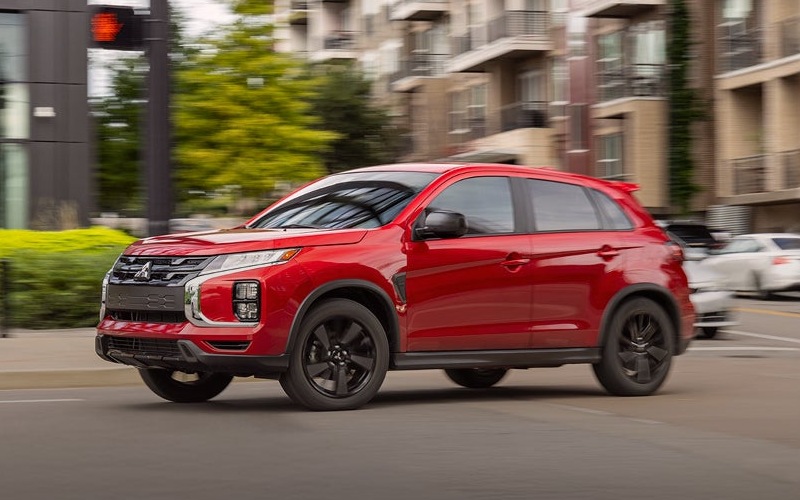
LaFontaine Mitsubishi Ann Arbor – 2025 Mitsubishi Outlander Sport 2.0 SE — Smart Features for Plymouth, MI Commuters
The 2025 Mitsubishi Outlander Sport 2.0 SE stands out as a practical, confidence-building compact SUV for drivers navigating Plymouth, MI’s daily rhythms—think quick hops along I-275, neighborhood errands around Kellogg Park, and after-work commutes up Ann Arbor Road. The SE builds on the Outlander Sport’s standard All-Wheel Control (AWC) with thoughtful upgrades that remove small hassles and add peace of mind. FAST-Key Entry System and Push Button Start trim seconds from your routine, heated front seats take the edge off cold mornings, and power-folding side mirrors make parking easier on tight downtown streets and in crowded surface lots.
Connectivity is straightforward and modern. The 8.0-inch Smartphone-Link Display Audio (SDA) with Apple CarPlay® and Android Auto gives you familiar app access through a large, responsive screen. Combined with HD Radio® and SiriusXM®, the 6-speaker audio system offers clear, balanced sound that elevates podcasts and playlists on longer drives toward M-14 or Northville. The 2.0L MIVEC DOHC 4-Cylinder with a CVT emphasizes smoothness and efficiency, while AWC adds confident traction that makes a real difference during mixed-surface days when you’re bouncing between subdivision streets and higher-speed highway ramps. The cabin’s combination soft-touch seating surfaces feel more refined than you’d expect at this level, and the 60:40 folding rear seat keeps cargo loading simple for grocery runs or weekend equipment.
Safety stands tall on the SE. In addition to Forward Collision Mitigation (FCM) with Pedestrian Detection, Lane Departure Warning (LDW), and Automatic High Beam (AHB), the SE includes Blind Spot Warning (BSW) with Lane Change Assist (LCA) and Rear Cross Traffic Alert (RCTA). On Plymouth’s busier corridors, these features help reduce stress by monitoring the spaces around you during merges or when backing out between taller vehicles. The power-folding side mirrors add a thoughtful layer of protection in narrower parking slots, and the rearview camera provides a clear perspective for precise maneuvers. Together, these driver-assist systems create a calmer, more predictable driving experience.
Practical daily living details show up throughout the 2.0 SE. The interior layout keeps frequently used controls where you expect them, so you can quickly adjust climate settings, skip a track, or answer a call from the steering wheel without fumbling. Materials are durable with just enough softness at key touchpoints to feel a step above basic. And whenever your schedule calls for a quick shuffle of space, the split-folding rear bench drops flat, making room for bulkier items like a folded stroller, sports bags, or a week’s worth of groceries from local markets. The result is a small SUV that doesn’t feel small when you need it to do the big stuff.
Warranty support is another strong point. Mitsubishi Motors Confidence includes 2-Year/30,000-Mile Limited Maintenance and a 10-Year/100,000-Mile Powertrain Limited Warranty, providing long-term peace of mind for Plymouth owners who plan to keep a vehicle for the long haul. Paired with simple, approachable technology and an easy-to-park footprint, the 2.0 SE is a compelling answer for local commuting, errands, and occasional road trips out of town.
If you are weighing trims, the 2.0 SE often emerges as the balanced choice: you get the larger screen and smartphone integration you want, the safety and driver-assist tech you’ll use daily, and the comfort features that make winter mornings and busy evenings less complicated. It’s practical, right-sized, and tuned for a predictable, confident drive—exactly what many Plymouth commuters need. LaFontaine Mitsubishi Ann Arbor is here to help you explore the 2.0 SE in person, compare features on your terms, and set up a drive that mirrors your routine so the decision feels easy.
- Everyday confidence: All-Wheel Control (AWC) and 2.0L MIVEC power with composed ride quality
- Intuitive tech: 8.0-inch Smartphone-Link Display Audio (SDA) with Apple CarPlay®, Android Auto, HD Radio®, and SiriusXM®
- Convenience upgrades: FAST-Key Entry System, Push Button Start, and power-folding side mirrors
- Added safety: BSW with LCA and RCTA on top of FCM with Pedestrian Detection, LDW, and AHB
- Flexible interior: Combination soft-touch seating and 60:40 flat-folding rear seat for quick cargo changes
Frequently Asked Questions:
How does the 2.0 SE differ from the LE?
The SE adds Blind Spot Warning (BSW) with Lane Change Assist (LCA) and Rear Cross Traffic Alert (RCTA), FAST-Key Entry System, Push Button Start, power-folding side mirrors, and a 6-speaker audio setup. It builds on the LE’s 8.0-inch SDA and heated seats for a stronger safety and convenience package.
Is All-Wheel Control (AWC) standard on the 2.0 SE?
Yes. AWC is standard on every 2025 Outlander Sport trim, including the 2.0 SE, enhancing traction and stability for varied Michigan road conditions.
What connectivity does the SE include for daily commuting?
The SE features an 8.0-inch Smartphone-Link Display Audio (SDA) with Apple CarPlay® and Android Auto, HD Radio®, SiriusXM®, USB ports for front and rear passengers, and steering wheel audio and voice controls for easy access on the move.
Can the SE handle a mix of errands and weekend trips?
Absolutely. The 60:40 rear seat folds flat to open up the cargo area for gear and groceries, while AWC, LED lighting, and the SE’s safety suite maintain confidence during longer drives or busy weekend schedules.
When you are ready to take a closer look, our showroom team is serving Canton, Plymouth, and Farmington and will tailor a walkthrough to how you actually drive and park. From cabin fit to tech walkthroughs—plus warranty and maintenance coverage explanations—we keep the process clear and efficient so you can make a confident, informed choice.
*Image may not be actual model
Request more 2025 Mitsubishi Outlander Sport information
Connect with us
