

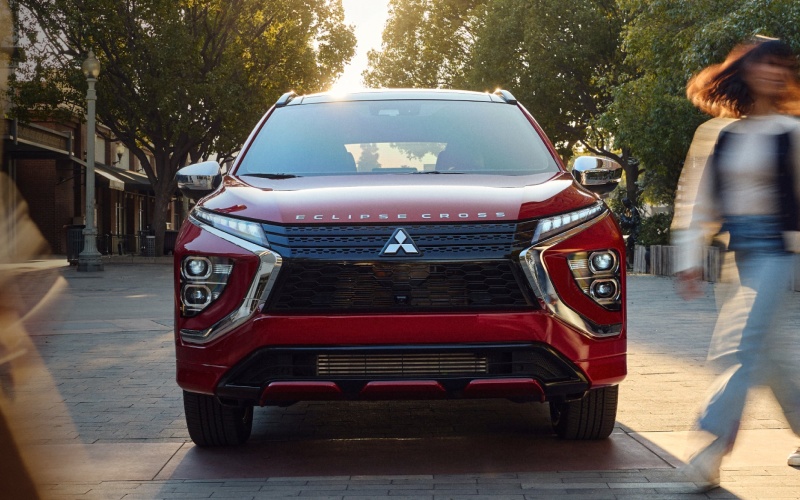
LaFontaine Mitsubishi Ann Arbor – Which AWD system fits daily life better around Dexter, MI — 2026 Mitsubishi Eclipse Cross’ S-AWC or 2026 Jeep Compass’ Active Drive 4×4?
When shoppers compare the 2026 Mitsubishi Eclipse Cross and the 2026 Jeep Compass, one question rises to the top: which all-wheel-drive system feels more reassuring in everyday driving? You’ll see plenty of spec-sheet talk about modes, crawl ratios, and horsepower. But if your miles are mostly paved—school drop-offs, parking garages, office runs, and weekend getaways—the way each system anticipates changing grip and keeps the cabin calm matters more than an extra off-road setting you’ll rarely use. Below, we’ll break down how Mitsubishi’s Super-All Wheel Control (S-AWC) and Jeep’s Active Drive 4×4 systems behave in the real world, and where each shines.
What S-AWC and Active Drive do on the roads you actually drive
Mitsubishi’s S-AWC is designed to be predictive and subtle. It coordinates the vehicle’s stability control, braking, and torque distribution to keep you on your intended path, even when a lane line is buried under slush or one side of the road is shinier than the other. There’s no drama—just a settled steering feel and the sense that the vehicle won’t get pulled off course by patchy surfaces or crowned pavement. That’s especially helpful when you’re turning left across traffic and hit a painted arrow or a manhole cover at the apex. S-AWC focuses on the kind of micro-corrections that reduce both steering corrections and heart rate.
Jeep Active Drive 4×4 sends power to the wheels that need it and lets you choose drive modes via Selec-Terrain. In Compass Trailhawk, Active Drive Low adds a 20:1 crawl ratio and a Rock Mode that’s superb for technical terrain. On-road, the standard Active Drive system confidently moves torque around to find grip, delivering the poised traction you’d expect from a Jeep. Where it differs from S-AWC is in the way the chassis feels when the surface changes quickly—S-AWC tends to smooth over those transitions a bit more in daily use, while Active Drive is tuned with a broader remit that includes more frequent off-pavement work.
Comfort, noise, and those “everyday” intersections
The compact SUV that makes you less tired at day’s end is usually the one that keeps noise and vibration out of the cabin and avoids needless shifting or throttle flare. In the 2026 Eclipse Cross, the turbo 1.5-liter and its smooth CVT work quietly in the background, and the S-AWC system reduces the steering corrections you make on uneven surfaces. It’s a calming effect you notice during long stretches on I-94 and on side streets where potholes and repairs can upset a chassis. When you pull out to pass or merge, available paddle shifters let you “slot” into the right ratio, but the baseline character is serene, especially for passengers.
In the 2026 Compass, the 2.0-liter turbo and 8-speed automatic deliver zippier response and more confident towing, particularly helpful if your plans include a small trailer. The all-wheel-drive system is more than capable on wet or snowy days, and Trailhawk’s hardware elevates rough-road performance. If you truly split your time between trailheads and pavement, that combination is compelling. But if you mostly face stoplights, freeway ramps, and city parking, you may prefer the Eclipse Cross’s quieter demeanor and the way S-AWC trims little slips before they become big steering inputs.
Parking, tech, and stress reduction
Parking lots can be more stressful than snow—tight aisles, low visibility, and people darting around. Here, the 2026 Eclipse Cross’s available Multi-View Camera System gives you a 360-degree perspective. Pair that with an available Handsfree Power Tailgate and you solve two everyday headaches: seeing what’s around you and loading cargo without a juggle. Apple CarPlay and Android Auto compatibility are straightforward, and available Mitsubishi Connect with Safeguard and Remote Services adds peace of mind.
The 2026 Compass counters with an available 10.1-inch Uconnect touchscreen and an available 10.25-inch Digital Cluster Display that are both crisp and responsive. Available Active Driving Assist can reduce fatigue on longer drives. While Compass offers an available hands-free power liftgate and excellent outward visibility, it typically doesn’t offer a factory 360-degree camera, so drivers who prize top-down parking views may lean toward Eclipse Cross on feature content alone.
Long-term confidence and maintenance support
One of the biggest differentiators here is ownership coverage. Mitsubishi backs the Eclipse Cross with an industry-leading 10-year/100,000-mile Powertrain Limited Warranty, 5 years of 24-hour Roadside Assistance, and standard 2-Year/30,000-Mile Limited Maintenance. That’s a meaningful signal of durability and support for the way most drivers own a compact SUV—years and tens of thousands of miles of commuting, errands, and road trips. Jeep’s warranty coverage is solid, but Mitsubishi’s longer powertrain coverage and built-in maintenance tip the scales if you’re trying to minimize long-term surprises.
Which is right for your life near Dexter, MI?
If your driving is 95-percent pavement—commuting, after-school pickups, and regular trips to the market—the Eclipse Cross’s S-AWC and its calm, quiet chassis are the advantages you’ll feel most often. If you tow more frequently or spend many weekends on rugged two-tracks, Compass’s extra power and Trailhawk hardware are legitimate strengths. Most shoppers, though, will notice the Eclipse Cross’s refinement, parking tech, and ownership coverage every day. That’s why many local drivers ultimately choose it after a back-to-back drive.
Frequently Asked Questions:
Which AWD system reacts faster on wet or uneven pavement?
Both are quick to find grip, but S-AWC’s integration of stability control, braking, and torque distribution tends to feel more seamless in everyday transitions, like painted lines, steel plates, or plowed-but-slick sections.
Do I need Trailhawk capability if I don’t go off-road?
No. Trailhawk shines off-pavement. If your miles are urban and suburban, Eclipse Cross’s S-AWC provides the traction you want without the off-road focus you may not use.
Which model makes parking easier?
Eclipse Cross offers an available Multi-View Camera System for a 360-degree view, which helps with tight spaces and low-speed maneuvering; Compass generally does not offer a factory surround-view camera.
Is there a difference in long-term coverage?
Yes. Mitsubishi includes an industry-leading 10-year/100,000-mile Powertrain Limited Warranty and standard 2-Year/30,000-Mile Limited Maintenance on Eclipse Cross, delivering more long-term value.
Next steps
Now that you know how the AWD systems behave in the real world, the best move is a back-to-back drive on your usual roads. Bring a typical load, test parallel spots, and take the same on-ramp. You’ll quickly sense why Eclipse Cross feels calmer in daily life. LaFontaine Mitsubishi Ann Arbor, serving Ypsilanti, Dexter, and Wayne with a knowledgeable, no-pressure approach, can set up an easy route and walk you through features that matter most to your routine.
In short, if your priority is year-round confidence, quietness, and everyday ease, the Eclipse Cross—with standard S-AWC, available Multi-View Camera System, and standout coverage—deserves the top spot on your list.
Request more 2026 Mitsubishi Eclipse Cross information
Connect with us
