

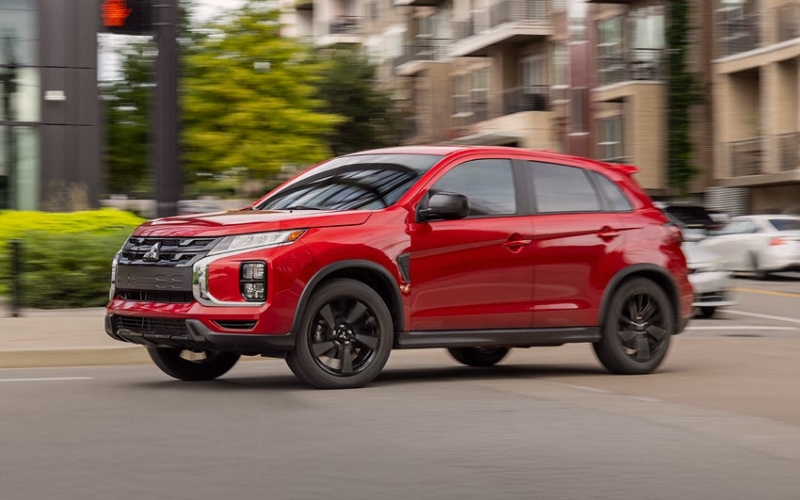
LaFontaine Mitsubishi Ann Arbor – Which SUV gives you more all-weather confidence around Wayne, MI — the 2026 Mitsubishi Outlander Sport or the 2026 Toyota Corolla Cross?
Choosing a small SUV often comes down to which one feels more composed when the weather and road surface refuse to cooperate. If the question centers on traction confidence around Wayne, MI, it helps to go deeper than a basic AWD badge. The 2026 Outlander Sport brings standard All-Wheel Control (AWC) across every trim, a multi-link rear suspension, and 8.5 inches of ground clearance. Corolla Cross offers the choice of front-wheel drive or all-wheel drive on gas models and multi-link suspension on hybrid variants. Both bring active safety and modern infotainment, yet the way each platform delivers grip and stability differs in daily life.
This guide answers the most common question shoppers ask when cross-shopping these two: which SUV builds trust fastest when the road gets messy? Below, you’ll find a structured look at traction systems, suspension design, steering character, technology that supports confident driving, and how those differences translate on I-94, in neighborhood cut-throughs, and on the two-lane stretches between errands. LaFontaine Mitsubishi Ann Arbor, serving Ypsilanti, Dexter, and Wayne, prepared this overview to address that single, crucial topic: everyday all-weather composure.
AWC vs. AWD: What’s the difference you actually feel?
Outlander Sport’s All-Wheel Control monitors wheel slip and driver input to balance torque front to rear proactively, not just reactively. With AWC standard, every trim delivers four-corner traction without needing to step up to specific configurations. That baseline matters when surprise lake-effect flurries dust the roadway or when a damp morning leaves an oily sheen on intersections. Gas Corolla Cross models can be equipped with AWD, but shoppers must choose the correct grade; hybrid grades pair AWD with a multi-link rear suspension for sharper chassis responses. Both approaches work, yet the Mitsubishi advantage is about certainty: the traction tool set arrives built-in on every model.
Suspension and steering: Why the rear layout matters
Outlander Sport uses a multi-link rear suspension across the lineup. This design helps the rear wheels follow uneven pavement more independently, improving ride quality and stability mid-corner. Corolla Cross uses a torsion beam rear suspension on most gas models and a multi-link arrangement on hybrids. That difference appears as steadier tracking over patched asphalt, less lateral head toss through expansion joints, and more composed braking on bumpy surfaces in the Mitsubishi. Electric power steering in both SUVs keeps effort light, yet Outlander Sport’s 34.8-foot turning circle tightens U-turns and parking maneuvers when traffic or snowbanks reduce space.
Active safety that supports traction
Both SUVs include forward-collision mitigation with pedestrian detection and automatic high beams. Toyota Safety Sense 3.0 adds lane centering and updated radar-cruise logic. Outlander Sport counters with a clear, predictable safety suite and the inherent advantage of standard AWC that keeps more tire contact available when evasive moves are needed. While software assists can inform and intervene, mechanical grip often determines the outcome at low speeds on slick surfaces. The Mitsubishi formula blends both: helpful alerts and braking assistance paired to traction hardware that is always online.
Tech and visibility: Small details, big assurance
Each model starts with an 8-inch touchscreen, Apple CarPlay® and Android Auto™, and intuitive steering-wheel controls. Outlander Sport adds standard LED low and high beams and standard rain-sensing windshield wipers across trims. Those two elements reduce cognitive load in quick-changing conditions by improving forward illumination and removing the need to constantly adjust wiper speed. Available heated front seats and an auto-dimming mirror with Homelink® further simplify the cockpit on dark commutes, while available rear USB ports keep passengers powered.
Real-world translation: What happens on your weekly loop
Picture a typical week: wet leaves on the pavement after a school drop-off, a late-afternoon shower turning to flurries on the way back from lunch along Michigan Avenue, and a quick turn into a tight driveway peppered with pothole patches. Outlander Sport’s standard AWC and multi-link rear end track cleanly over the rough patches, apply power smoothly when traction is mixed, and make the last-minute turning maneuver feel controlled. The Corolla Cross, equipped with AWD and multi-link suspension, can feel similarly settled, but only if those options are chosen. The practical takeaway is simple: Outlander Sport’s default configuration already matches the environment.
- Every-trim traction: Outlander Sport includes AWC standard, so four-corner help arrives without boxes to check.
- Chassis composure: A standard multi-link rear suspension helps the Mitsubishi stay planted over rippled corners and patched asphalt.
- Confidence add-ons: Standard rain-sensing wipers and LED low/high beams reduce effort in quick-changing conditions.
Frequently Asked Questions:
Does the Outlander Sport include AWD on every trim?
Yes. All-Wheel Control is standard across the Outlander Sport lineup, so you do not need to move up a grade for four-corner traction.
How does ground clearance compare?
Mitsubishi specifies 8.5 inches for Outlander Sport, supporting better clearance on rutted alleys or unplowed side streets. Corolla Cross lists 8.1 inches on most configurations.
Which model offers better maneuverability in tight spots?
Outlander Sport’s 34.8-foot turning circle helps with quick U-turns and snug parking. Corolla Cross lists a 17.7-foot minimum turning radius, which equals about a 35.4-foot turning circle on comparable wheels.
Final perspective
Both SUVs can be configured for capable all-weather driving. If the goal is to remove guesswork and build traction confidence right from the start, Outlander Sport delivers the surest path with standard AWC and a standard multi-link rear suspension that calms rough pavement. Add LED lighting and rain-sensing wipers that simplify reaction time, and the Mitsubishi platform feels tuned for southeast Michigan’s mixed surfaces and quick weather shifts. For a closer look, a short test route that includes neighborhood side streets, a freeway merge, and a few tight turns will make the differences obvious within minutes.
Visit LaFontaine Mitsubishi Ann Arbor for a walkaround focused on traction and chassis tuning, and bring the questions that matter for your daily routes. A well-structured comparison drive makes it easy to feel the gap in grip, stability, and steering response when conditions are less than ideal.
Request more 2026 Mitsubishi Outlander Sport information
Connect with us
